Glide of Shadows: A Skateboard Odyssey

Have you ever heard of a glass skater? What’s special about that? Does it break easily? That’s what crossed my mind when I first watched Devolver Digital’s end-of-year special in late 2022. Honestly, alongside Cult of the Lamb and Anger Foot, Skate Story didn’t seem very remarkable to me… and I’m glad I was so wrong. Today, I can say it’s an incredible game that draws you in and pulls you into its madness.
Of Philosophers and Ollies
Skate Story revolves around a demon made of glass and suffering, who is given a skateboard by the Devil under a straightforward bargain: skate to the Moon and consume it, and you’re free. But as expected, deals with the Devil are rarely straightforward.
The narrative unfolds in the Underworld, where the Skater navigates through ashes and smoke in “The Emptylands” to devour the Moon. Along the way, numerous tormented souls are encountered, needing rescue as the Skater traverses the nine circles of hell.
The game lacks voice acting; the story unfolds through on-screen dialogues and poems at the end of each chapter. For impatient gamers like me, this can be aggravating. Moreover, the game uses distant language with unusual words like “penitent” and “gaiters,” which feel unfamiliar and elevated. Symbolism pervades everything: ever-watchful eyes, infernal circles, and soul-filled rivers. Yet gradually, the pieces start fitting together, making sense even without direct explanations.
The Skater lacks deep reflections or heroic motivations. He’s merely a victim instrumentalized by a more powerful entity using him for their purposes, though he longs for freedom that he seems unable to express. In a world steeped in misery and pain, hope appears as a cruel joke.
Skateboards Belong to the Devil
The gameplay revolves around fundamental skateboarding mechanics, emphasizing smooth movement, exploration, and trick execution. You must perform ollies, kickflips, and grinds across “The Emptylands” while facing various obstacles and foes.
The game’s control scheme is designed to deliver a realistic, intuitive skateboarding experience, allowing a wide variety of tricks and maneuvers. If you’ve played other skateboarding titles recently, retraining your fingers might be challenging. It’s advisable to practice in open areas before embarking on missions.
Most of the nine chapters comprise three sections: an open area, a path, and a boss battle. In the final chapters, open areas give way to more contemplative experiences.
Within the open areas, you’ll find various characters who guide you on what you can do in the section, typically learning a new trick to obtain something in the map, acting as a key to the next section. For instance, you might need to collect letters in a word by performing different tricks to process a permit.
Open areas also feature a gift shop where you can purchase mission-related items, decks, stickers, and skate accessories. The currency is part of your soul, and you can gain more soul by continuously performing tricks in open areas or completing missions.
Once tasks in the open area are completed, a door opens leading to a straight path where you must navigate obstacles to reach a portal to another similar section with different challenges. Sometimes, you must cross a set number of checkpoints to open the portal, while other times, you have a time limit or need to earn enough soul points with tricks along the way.
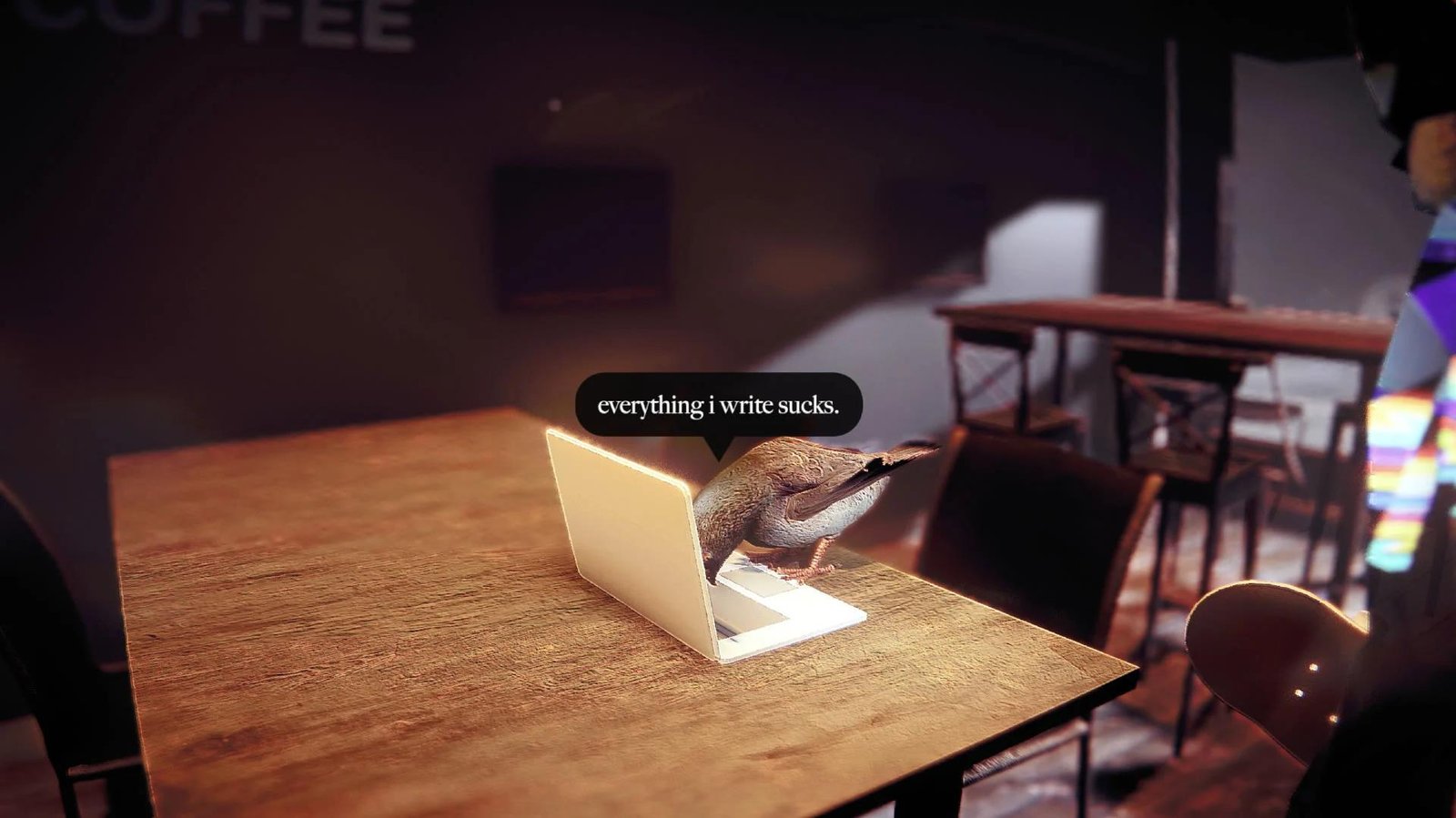
Boss battles occur after passing through the portals. Early battles, for example, involve different moons that need to be consumed by executing combos of consecutive tricks culminating in a final move upon landing. Combos must involve varied tricks performed with minimal gaps between them. A failed combo occurs if you lose control or land the combo outside the damage area.
Bosses constantly move and attack with lightning bolts, though some disorient you with gusts of wind. Yet, the true enemy is time, adding intensity and stress to the battles but making them incredibly satisfying.
A Clear Nod to Satanic Practices
While solid in mechanics and story, the game’s standout feature is its presentation. The artistic direction is superb, constantly playing with contrast and chromatic aberration that changes as the story progresses. Sometimes you encounter beautiful, ethereal environments, gazing upon stars and the infinite; other times, everything becomes blurry and decayed. Adding to this is the music by Blood Cultures, whose experimental pop adds a densely emotional layer of tension, desolation, euphoria, and even warmth. It’s among the best soundtracks I’ve heard in years.
A delightful touch was the homage to Neon Genesis Evangelion that blew my mind, adding cohesiveness to the complete experience. Skate Story is a tragedy, a repeating cycle with hope placed on a variable that could end it and kill the pain.
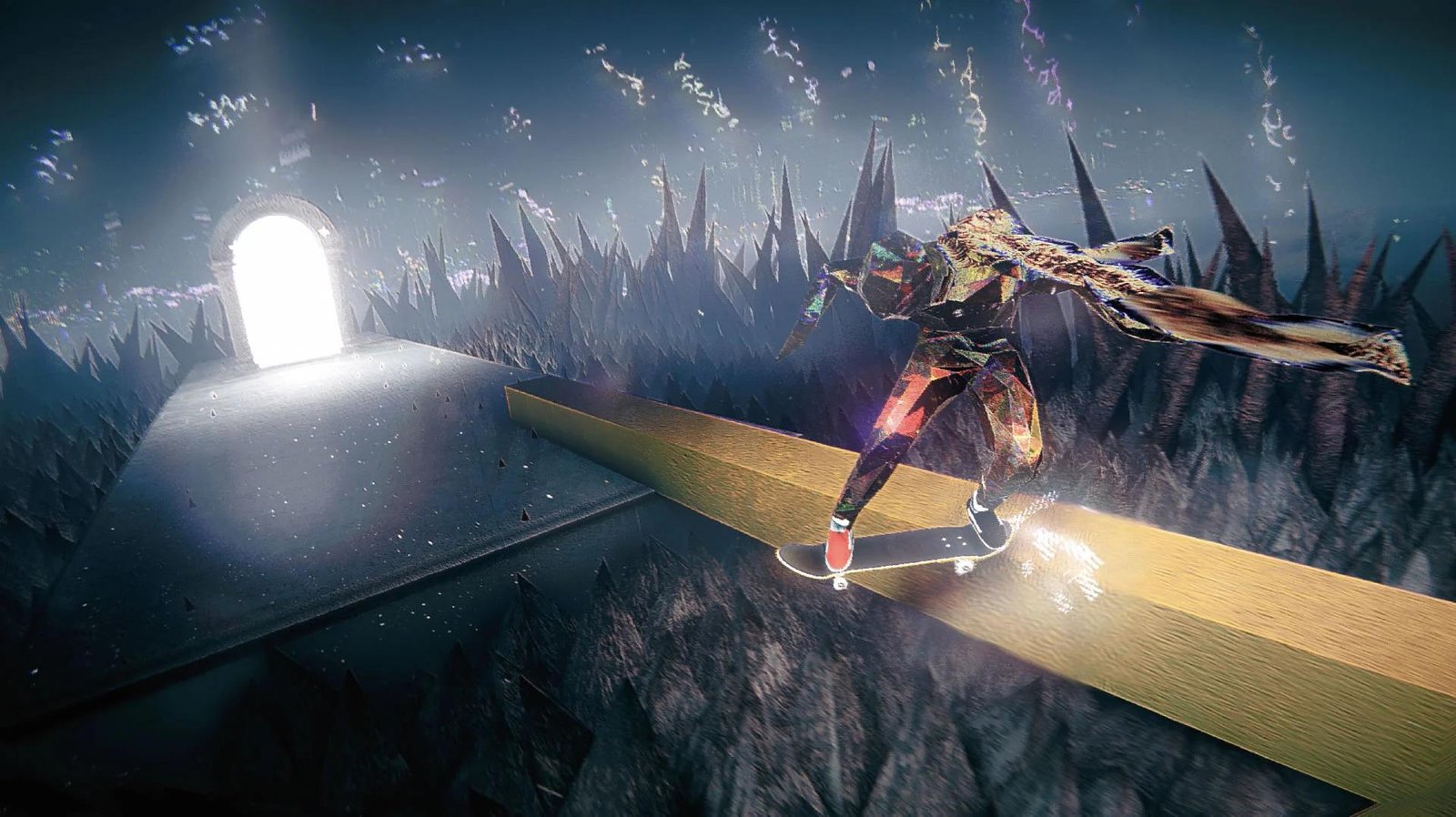
One complaint is the lack of an accessible on-screen guide to remember how to perform certain tricks, causing you to waste time figuring it out and having to restart some missions.
Additionally, the game’s marketing mentioned how changing wheels, decks, or trucks would alter control sensations, something I personally didn’t perceive. Thus, these seem merely decorative features.
Skate Story isn’t just a game; it’s an experience: each trick is a cry for freedom, and every fall is a reminder of the pain within. Its hypnotic aesthetics and symbolism-laden atmosphere transform skateboarding into a fascinating, dark ritual. Beyond minor details, it delivers a brutally immersive experience that leaves a lasting impact.



Post Comment